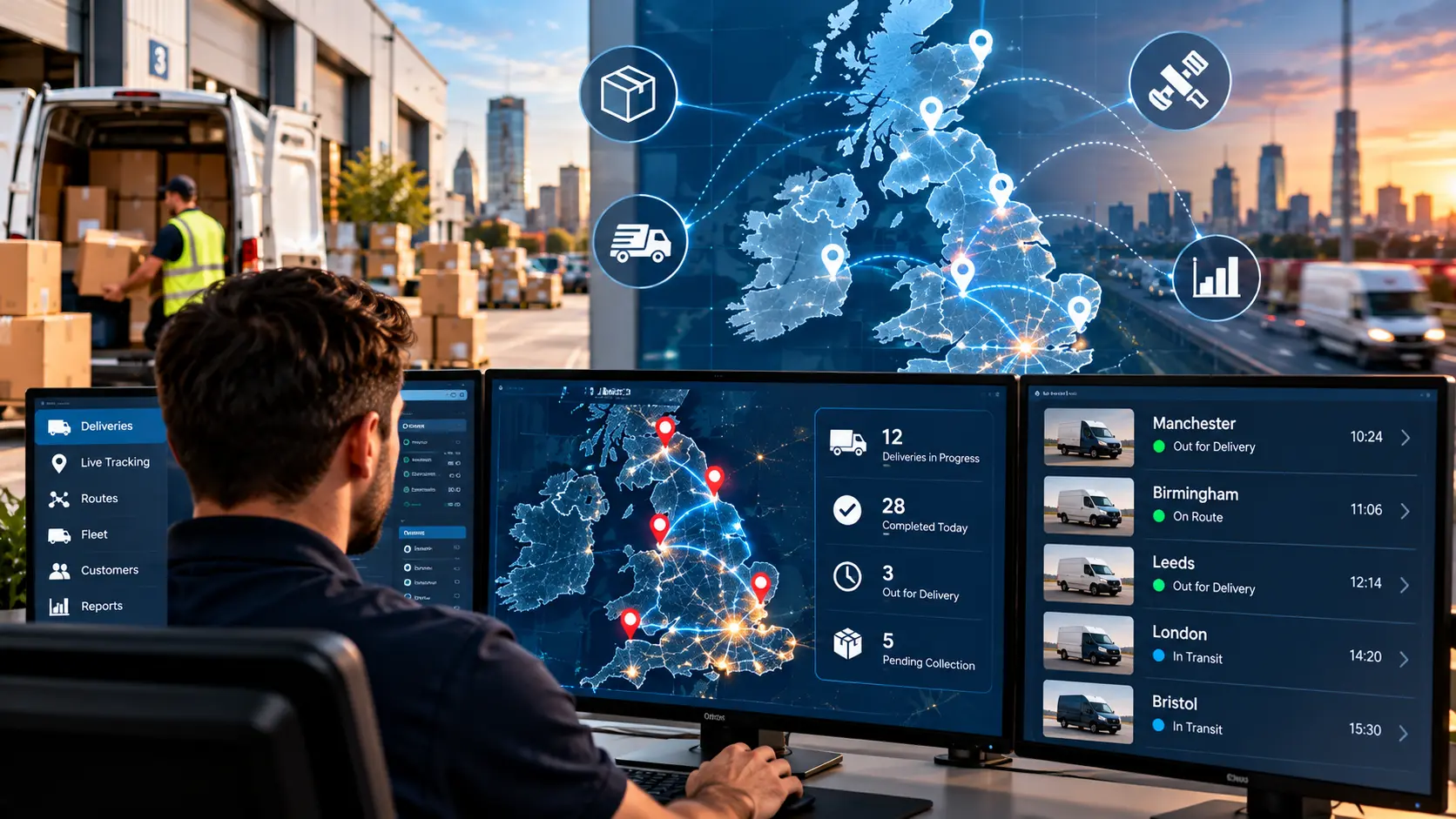
Technology has transformed the way goods are stored, transported and delivered.
From GPS tracking and route planning to digital booking systems and real-time delivery updates, technology is helping logistics companies operate more efficiently while giving businesses and customers greater visibility over their deliveries.
As the logistics industry continues to evolve, technology is becoming an increasingly important part of the delivery process.
Real-Time Tracking
One of the biggest changes in modern logistics is the ability to track deliveries in real time.
Traditional delivery services often provided limited information about where a shipment was once it had left the collection point.
Today, GPS and digital tracking technologies can provide much greater visibility.
Businesses can use tracking information to:
- Monitor delivery progress
- Estimate arrival times
- Communicate with customers
- Identify potential delays
- Improve delivery planning
Greater visibility can make the delivery process easier to manage for both businesses and customers.
Smarter Route Planning
Planning an efficient delivery route is an important part of logistics.
Drivers may need to visit multiple locations during a working day, and traffic conditions can change quickly.
Modern route-planning technology can help identify efficient routes while considering factors such as:
- Distance
- Traffic
- Road conditions
- Delivery locations
- Collection times
- Vehicle capacity
Better route planning can help reduce unnecessary mileage and make better use of drivers’ time.
Digital Booking and Communication
Technology has also changed the way customers arrange deliveries.
Instead of relying entirely on phone calls or manual paperwork, many logistics companies now use digital systems to manage bookings and delivery information.
Digital processes can make it easier to provide:
- Collection details
- Delivery addresses
- Delivery instructions
- Contact information
- Job references
- Delivery status updates
This can reduce unnecessary administration and make information easier to access.
Better Communication With Customers
Communication is an important part of a successful delivery.
Customers want to know when their goods have been collected, where they are and when they are likely to arrive.
Technology allows businesses to provide updates throughout the delivery process.
For example, automated notifications can inform customers when a delivery has been dispatched, while tracking systems can provide additional visibility during transportation.
This can make the delivery experience more transparent.
Data and Logistics
Modern logistics companies generate large amounts of information from their daily operations.
This data can be used to identify patterns and improve processes.
Businesses can analyse information such as:
- Delivery times
- Journey distances
- Collection locations
- Delivery volumes
- Vehicle utilisation
- Customer requirements
Over time, this information can help logistics businesses understand where improvements can be made.
The Growth of Electric Vehicles
Technology is also changing the vehicles used in logistics.
Electric vans and other low-emission vehicles are becoming increasingly visible on UK roads.
As battery technology develops and charging infrastructure expands, electric vehicles are becoming another consideration for businesses operating delivery fleets.
The transition to lower-emission vehicles is likely to remain an important topic for the logistics industry as businesses consider operating costs, environmental targets and future transport requirements.
Automation and the Future of Logistics
Automation is another area receiving significant attention across the logistics industry.
Large warehouses can use automated systems to move, sort and organise goods, while software can assist with inventory management and delivery planning.
Artificial intelligence and machine learning are also being explored for applications such as demand forecasting, route optimisation and operational planning.
However, technology does not replace the importance of people in logistics.
Drivers, warehouse teams, planners and customer service staff remain essential to making sure goods reach the right destination safely and efficiently.
What Does This Mean for Businesses?
For businesses, advances in logistics technology can provide greater visibility and more efficient ways to manage deliveries.
A company may benefit from:
- Better delivery tracking
- Faster communication
- Improved route planning
- More efficient administration
- Greater visibility of shipments
- Better use of delivery data
The technology available will vary between logistics providers, so businesses should consider which features are most useful for their particular requirements.
The Future of Logistics
The logistics industry is constantly evolving.
Technology is making deliveries more connected, visible and data-driven, while developments in vehicles, automation and artificial intelligence are likely to continue changing how goods are transported.
For businesses, the fundamental objective remains the same: getting the right goods to the right place at the right time.
Technology is simply providing better tools to help achieve that goal.
At Jasin Logistics, we understand the importance of reliable and efficient delivery for businesses. Whether you require a local delivery in Manchester or transportation across the UK, having the right logistics solution can help keep your business moving.
Need a reliable courier or logistics service? Contact Jasin Logistics to discuss your delivery requirements.